10 April 2012

Benefits of Reading to Babies and Children

By: Leanne Williams (Early Childhood Program Manager, The Little Big Book Club)

In her book Reading Magic, Mem Fox states: “If every parent understood the huge educational benefits and intense happiness brought about by reading aloud to their children, and if every parent – and every adult caring for a child – read aloud a minimum of three stories a day to the children in their lives, we could probably wipe out illiteracy within one generation.”

The benefits of reading to children are many. The human brain is most open to environmental influences in the first few years of life, with 75% of brain development occurring between birth and the age of four. Sharing stories and songs with your baby is the most important thing you can do as a parent to help their developing brain. As a baby absorbs new sights, textures, scents and sounds, the connections in their brain that make learning possible multiply and become stronger.

Research has shown that children whose parents read to them when they are young learn to speak, read and write more easily. It is never too early to start reading to your baby. Even though they may not understand the words that you read to them, they love hearing the sound of your voice and they learn that reading is important and fun. Most importantly, it is a wonderful opportunity to bond with your baby.

10 Tips for Nurturing a Baby Bookworm

  1. Try and read with your baby every day. Find a time when they are happy and interested in what is happening around them.
  2. If they get tired or restless it is ok to stop. You don’t have to finish the book.
  3. Babies like books that have bright, clear and simple pictures. They enjoy books about things they are familiar with such as animals, food, toys and other babies! Some of my favourites are:
        - See Me Move;
        - Baby Gets Dressed;
        - Where Is The Green Sheep?
        - Dear Zoo;
        - Spot;
        - Maisy; and
        - Steve Paris Board Books.
  4. Board books are great for babies as they will want to grab the pages, put them in their mouth and throw them. This is ok, it’s how they learn.
  5. If you are worried about babies damaging books, keep precious books on a higher bookshelf but make sure there are lots of sturdy board books in baskets and on low shelves that little ones can reach themselves.
  6. When you are reading to your baby try to look at both the book and your baby. Point to the pictures and talk about the things your baby is looking at.
  7. You don’t have to read the words that are written on the page – it’s ok to make up your own story.
  8. Try and make your voice as interesting as possible. Use different voices for the characters in the story, if there is an animal in the story make the sound the animal makes. All of this will help make reading fun and enjoyable for your baby.
  9. Books make great gifts. Ask family and friends to give books as birthday or Christmas presents. They also make a great baby shower gift.
  10. Collect your free It’s Story Time Bag. All babies in South Australia are eligible for a Little Big Book Club It’s Story Time Bag. These bags are available for your baby during their first year from your local library or from Child and Youth Health. It is full of fun resources to help and inspire you to read and sing to your little one every day.


About the Author: Leanne Williams is the Little Big Book Club Project Manager and is responsible for the implementation and ongoing development and promotion of LBBC’s range of resources nationally. Leanne has a Bachelor of Education and fifteen years’ experience in teaching children aged three to thirteen. She has taught in both Australia and overseas providing her with many rich and diverse experiences. Her passion has always been children’s literature and literacy.

The Little Big Book Club are currently running a survey in conjunction with UniSA on how SA families talk, read and communicate with their babies. Click here to complete this short survey.

Note from Laura (Sustainababy founder): Reading is a great way to teach your child certain concepts. Books about new babies can help ease the anxiety your current child experiences when a new addition arrives in to the household and better prepare them for life with their baby sibling. Children’s books focussed on caring for the environment will help nurture these values within your child from an early age. Reading is also an activity that can be eco-friendly and free! Just join your local library to start enjoying the benefits. If you would like to invest in your own library, Sustainababy’s range of books suited to babies and children are available to purchase here.

This article was provided by Leanne Williams for Sustainababy however has also been published in South Kids Magazine.
 

CATEGORY: how to read to baby, reading to child, child, reading, to, baby | POSTED BY: Laura McIlwaine |

31 March 2012

How to Cycle Safely with Baby

By: Tanya Fyfe (BEng(Environmental))

Enjoy the eco-friendly and healthy activity of cycling with baby by following these simple tips

Throughout my childhood I remember many happy hours at home on the farm, and on family holidays racing around on bicycles with my brothers.  It was even more fun if our parents or grandparents came along and we were allowed to explore further afield.

Cycling is a fantastic eco-friendly family activity and form of exercise. Don’t assume that babies and their carers need to be excluded either. By investing in the correct equipment, you can easily and safely take your baby along for the ride!

The following options for cycling safely with baby each have their advantages and disadvantages. Ideally, see if you and bub can try out your preferred choice first to save investing in an option that may not necessarily work will for you. You may be able to hire a similar model or borrow one from a friend.

When our son Billy was younger, we went riding with him on our back in his Ergobaby carrier. I felt that he was safer strapped to us than the bike, and checked with our local police that this is legal. If might be wise to confirm this for your local area if you are interested in this option. As Billy got older however, he wasn’t so keen on cycling in the carrier. He seems to find the forward riding position less comfortable than the upright walking position, but this may be a personal thing. The main thing is that baby and parent are safe and comfortable!

Don’t forget that the usual cycling safety rules and precautions are all the more important if you have precious cargo. Wear helmets, use bike paths or stick to quiet roads and follow the road rules. Make yourself visible by wearing bright clothing and/or lights, protect everyone from the sun and keep a close eye on older children who are riding under their own steam.

If you would like to incorporate cycling into your family’s routine, here are a few ideas on how to get started:

  • Ride to the shops, or to pick older children up from school (and reduce reliance on the family car)
  • Plan family holidays closer to home (which also reduces your ecological footprint) and take the bikes along. Alternatively you may be able to hire bikes at your destination, but don’t forget to check that they can provide a bike seat or trailer if you intend to use these.
  • Start a family tradition like a Sunday morning ride. You could vary the route, or always ride the same route and incorporate a treat like stopping at a special playground, taking a picnic or buying ice-creams.


Happy cycling!

About the Author: Tanya Fyfe is an eco mum and environmental engineer and lives in the WA Goldfields with her husband and son Billy. The family's aim is to live sustainably and for Billy to grow up understanding where food comes from and how it is produced. They generate solar electricity and have an organic vegetable garden and modest orchard irrigated entirely with grey water.
 

CATEGORY: bub, cycling, safe, safely, baby | POSTED BY: Laura McIlwaine |

10 January 2012

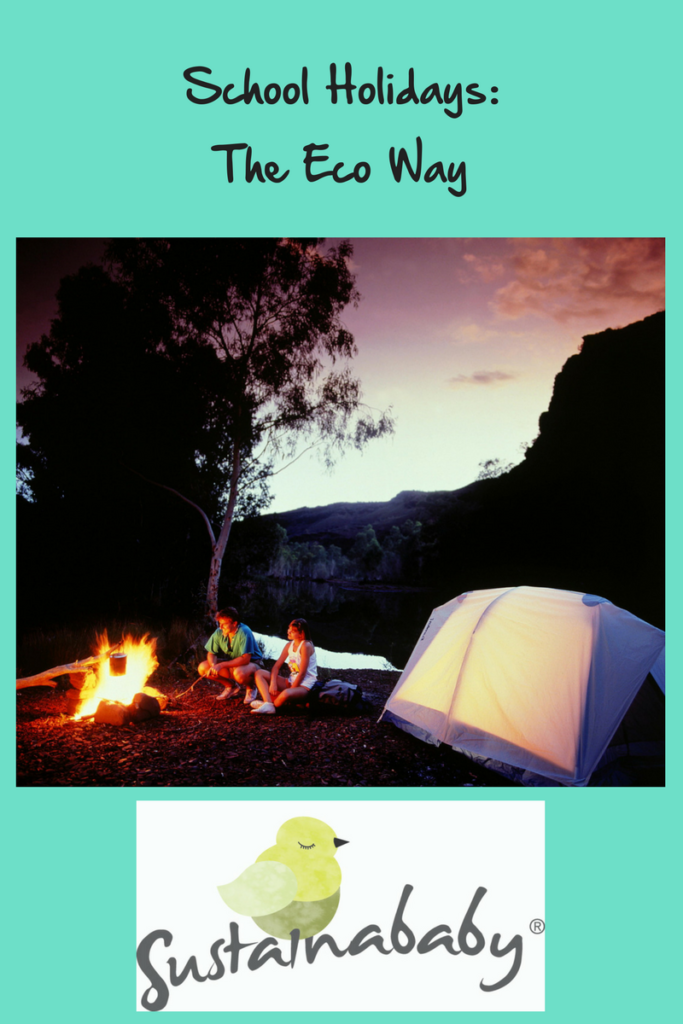
Tips for an Eco-Friendly Holiday

By: Laura Trotta (BEng(Enviro), MSc(Enviro Chem))

It’s currently peak holiday season across much of Australia and many families are travelling to have their annual downtime. 

If you've never really thought about eco-friendly holidays, it may surprise you to know that you won't need to compromise on style or experiences. Simply follow our tips below to ensure your holiday is easy on the environment.
 

Before You Leave

  • Ensure all household appliances are turned off at the wall to minimise standby power consumption.
  • Empty and turn off your second fridge (if applicable) so you’re only running one while away. 
  • Set your automatic watering system to only water in the evenings to minimise evaporation.


Driving Holidays

  • Pack only what is necessary as the more you pack, the more fuel you will consume. Space cases are more aerodynamic than luggage on a roof rack or in a trailer.
  • Thoroughly sweep out the inside of your vehicle and wash the outside before you leave home, paying particular attention to the tyres and mud guards, to remove any mud or soil that can transport weed seeds.
  • Drive to the speed limit and pump your tyres up to 42psi to minimise fuel consumption.
  • If renting a vehicle, opt for smaller, more fuel efficient models (resist the luxury car upgrade!).
     

Flying Holidays

  • Offset your flights.
  • Pack your own snacks / sandwiches in reusable containers for consumption during the flight rather than eating highly packaged airline food.
     

Travelling with Baby

  • If using disposable nappies while on holiday, opt for biodegradable varieties such as Moltex. Use biodegradable nappy bags for soiled nappies only and organic/biodegradable wipes rather than the conventional variety.
  • Stay in self-catering accommodation so it’s easy to make your own food including baby purees (use the potato masher if no stick blender is present).
     

At Your Destination

  • Stay in registered eco-friendly accommodation if possible (see suggestions at base of article) or camp sustainably.
  • Use resources wisely as you would at home - keep showers short and turn off lights when not in use. 
  • Don’t stray from walking / 4WD tracks as this can damage delicate vegetation systems and cause erosion.
  • Do not feed local wildlife – keep them wild.
  • Use sustainably-sourced firewood for campfires rather than collecting your own from nearby scrub.
  • Observe Total Fire Ban days.
  • Participate in environmentally-friendly activities such as wind surfing, kite boarding, cycling, snorkelling, board games/cards, reading, walking/hiking, swimming or bird watching. Steer clear of activities such as sky diving, jet skiing, jet boating and 4WDing.
  • Leave the complimentary toiletries in your hotel room. These packaging-intense items usually end up straight in landfill or cluttering your bathroom cupboard. Instead, fill small reusable bottles with your own body products from home.
  • Buy local produce to save on food miles and support local business.
     

Returning Home

  • Take litter (or recyclables) away with you if no local disposal/recycling facilities exist.
  • Thoroughly sweep out the inside of your vehicle and wash the outside before you leave your holiday destination, paying particular attention to the tyres and mud guards, to remove any mud or soil that can transport weed seeds.
     

Ecotourism Destinations

Ecotourism is a blend of conservation and tourism: it’s planned to be sustainable, with the least possible impact on the landscape and environment being visited. As one of the fastest growing sectors of tourism worldwide, there is no shortage of quality eco-friendly holiday destinations and here’s a small number of quality destinations that we recommend:

TASMANIA
Huon Bush Retreats is a carbon positive ecotourism village overlooking the Huon Valley in Tasmania’s beautiful south east, just 45km south of Hobart. Established in 2002 when private investors purchased and saved a forest earmarked for logging, Huon Bush Retreats funds the conservation of the forest it calls home. Guests can choose to stay in contemporary cabins or deluxe tipees. Camping and van sites are also available. All accommodation facilities have been built to harmonise with their environment and incorporate solar power, composting toilets and natural rainwater storage. Like the name suggests, this is a true retreat destination and a long list of organised activities simply doesn’t exist. You can walk the interpreted walking tracks and check out the abundant wildlife if you desire, or you can simply slow down and reconnect with yourself and the environment.
**Mention this article and children will stay FREE on your 2nd and any subsequent nights.**

SOUTH AUSTRALIA
Rawnsley Park Station is well worth a visit if you’re heading to the glorious Flinders Ranges in South Australia’s Outback. Located 430 north of Adelaide, Rawnsley Park is a working sheep farm come award-winning tourism facility overlooking the southern side of Wilpena Pound. The wide range of accommodation available ranges from campsites through to the most luxurious eco villas, making Rawnsley within everyone’s budget! Four-wheel drive tours, scenic flights, hot air ballooning and mountain bike hire are all available and there is a network of excellent bushwalking trails located on the property. I can personally recommend the Flinders Ranges as one of the most scenic and colourful landscapes in Australia and it’s a place that I return to time and time again. Rawnsley’s Woolshed restaurant also dishes up a yummy feed!

VICTORIA
The Great Ocean Ecolodge is located within the grounds of The Cape Otway Centre for Conservation Ecology, at Cape Otway in Western Victoria. Adjoining the Great Otway National Park, wildlife abounds on the property. Delight in the koalas in the treetops or play a vital role in saving the Tiger Quoll. The Ecolodge is designed and operated sustainably, with solar power, solar hot water, pure rainwater and organic dining. All profits are reinvested into wildlife conservation so you can relax, unwind and do your bit for the local environment! Children are welcome.


QUEENSLAND
O’Reilly’s Rainforest Retreat is based in the World Heritage Lamington National Park in the Gold Coast Hinterland, just 2 hours drive south west of Brisbane. Visitors can stay in a variety of accommodation from the guest house-style Rainforest Retreat through to the private luxury of self contained Mountain Villas. Couples and families will delight in the variety of activities on offer including bushwalking, Australia’s first Tree Top Walk, Segway Safari Tours, Birds of Prey Flight Show, guided 4WD tours and bird feeding. A 190m flying fox ride over the picturesque Morans Creek will thrill the young and young at heart!


NEW SOUTH WALES
Honeycomb Valley Farm in Nabiac is 3 hours drive north of Sydney and is an ideal farmstay for families or couples. Children and adults will be delighted by the variety of rare animal breeds farmed here, including miniature Galloway cattle, Saanen dairy goats, Suri alpacas and Black-headed dorper sheep. Check out the variety of rare breed chickens living in recycled caravans and enjoy food from the largest solar oven in Australia. All natural farm made balms and soaps using the farm's goat's milk, honey and beeswax are available for purchase so you can take some of Honeycomb Valley home with you.

About the Author: Laura Trotta (BEng (Enviro), MSc (Enviro Chem)) is an eco mum, environmental engineer and founder of Sustainababy. She currently lives in regional South Australia with her husband Paul and son Matthew. She lived in Victoria, Tasmania and Queensland prior to SA and has travelled extensively throughout these States, generally through National Park walking trails with a heavy backpack. Her most memorable eco-friendly holiday was hiking the 8 day South Coast track in Tasmania (pre-motherhood).


CATEGORY: ecotourism, holiday, ideas, tips, Eco | POSTED BY: Laura McIlwaine |

10 October 2011

Why Gardening is Great for Kids

By: Caroline Roberts (Gardening 4 Kids)

Gardening is a wonderful activity for children. Not only is it a fun and engaging, it teaches children skills that will stay with them throughout their lives. Here are some of the advantages of gardening for kids:

  1. Gardening actively connects children with nature and helps develops their understanding and empathy for our environment. It can also encourage eco-friendly practises such as composting, recycling and organic food principles.
  2. Growing a garden encourages healthy eating habits. If children grow their own fresh produce they are more likely to eat it. It is also great for teaching children about where their food comes from.
  3. Gardening teaches children about responsibility. When caring for a garden children can experience the rewarding feelings of success when it grows and learn the consequences if it doesn’t.
  4. People, especially children, learn through their senses and gardening stimulates all five senses e.g. tasting new flavours, smelling flowers and herbs and seeing the changes that occur with the seasons.
  5. Gardening encourages communication and cooperation skills amongst children when working with others. It is a great way for children to share their knowledge and skills with other people of all ages.  Gardening is not only a fantastic way for children to learn about science, it is good for developing numeracy and literacy skills too. 
  6. Gardening is great for relaxing children. It is particularly wonderful for children with ADD and ADHD as its multi-sensory nature helps them to focus on the task at hand.
     

So if you're thinking of beautifying your garden or creating a small vegetable plot, why not get your children involved and let them enjoy all the wonderful benefits of gardening.

To help you get your children out into the garden, enter code SUSTAINABABY in your shopping cart at www.gardening4kids.com.au to receive 10% off your order. Offer expires 31 October 2011.


About the Author: Caroline Roberts is mum to an inquisitive toddler, primary school teacher and owner of Gardening 4 Kids. As an environmental educator and gardening specialist, she has a passion for educating children about a healthy lifestyle and a sustainable future.

CATEGORY: children, gardening, kids, benefits | POSTED BY: Laura McIlwaine |

30 September 2011

Jellystone Designs Silicone Teething Jewellery

With the increasing range of baby products on the market offering natural relief from teething pain, you can be forgiven for feeling a little overwhelmed. I must admit the first thought that crept through my head when I discovered the new range of Jellystone Designs teething jewellery was "Here we go, another teething product" but this was quickly followed by "But wait! These look really cool!"

Maybe I'm a little patriotic, but I think Aussies are a creative and entrepreneurial bunch and when we put our minds to something, we do it in fascinating style. The ladies at Jellystone Designs sure have succeeded in this area!

Not content with teething jewellery designs they encountered while travelling overseas, they decided to launch a colourful and chunky range that typifies the jewellery style Australian women prefer. This jewellery doesn't just look good, it will quickly become that coveted item you will not want to leave home without.

It's no secret that teething babies love to chew and slobber on anything they can sink their aching gums into and most aren't too discerning about what this object is! Manufactured from 100% hospital grade silicone, Jellystone Designs teething jewellery contains NO PVC, BPA, phthalates, cadmium or lead. Mums can therefore be confident that their babies are being provided with natural teething relief that isn't going to add to their daily chemical dose.

Sustainababy stocks the Jellystone Designs Teething Pendant and Teething Bangle. Available in 12 modern colours and priced from $17.95, Jellystone Designs are in store now!


CATEGORY: chewable, Jellystone, jewellery, teething, baby | POSTED BY: Laura McIlwaine |